NDIS Strength Training

Strength Training Under the NDIS: Evidence‑Backed Programs That Improve Stability, Pain, and Confidence

For those of you living with neurological, psychosocial or physical disabilities, or supporting a participant with these disabilities, strength training might feel like a ‘nice-to-have’ instead of a priority, especially when there is pain or mobility is questionable. But in a well-designed program, strength work becomes more than just building muscle. It becomes a concrete pathway to stability, safer mobility, better function in daily life, and increased confidence.

This is where NDIS exercise physiology comes in. In NDIS exercise physiology, Exercise Physiologists use evidence-backed assessment and programming that matches strength training to functional goals—so that sessions produce real-world outcomes, not just gym results. Here’s a science-based breakdown of how NDIS Exercise Physiologists develop programs to meet NDIS functional outcomes for people with disability.

A woman balances on an exercise ball in a gym, demonstrating physiotherapy exercises for stability.

Why Strength Training Works (Even When Disability Changes the Rules)

Training strength isn’t just about isolated strength. The foundations are:

  • Neuromuscular control: Enhanced muscle strength facilitates improved recruitment, contributing to balance and postural stability.
  • Tendons and joints tolerance: The more load you carry, the more resilient you become, and often the less sensitive to pain.
  • Motor learning: practice gives you confidence in your movement patterns.
  • Functional capacity: strength as a basis of transfers, walking, stair negotiation, standing from chair, carrying items.

In practice, NDIS exercise physiology programming is focused on the ‘how’ of movement: stability, endurance and control, while being mindful of limitations and safety.

How EPs Design NDIS Strength Programs: The Clinical Logic

An exercise physiologist does not prescribe cookie cutter workouts. It’s to develop a systematic, quantifiable plan. This is the usual order in evidence-informed design:

1) Evaluation: From Symptoms to Function

Functional screening is the starting point for EPs: movement capacity, pain behaviour, fatigue patterns, balance, gait and activity participation. This is where exercise physiology ndis and NDIS exercise physiologists thinking is essential – because the goal is function in daily life.

2) Matching NDIS Outcomes and Goals

Strength training is inseparable from NDIS goals in a high quality plan. This has a direct relationship to rehabilitation goals such as safe participation in the community, improved independence and increased participation in physical activity.

3) Planning the Dose: Intensity, Volume, and Progression

EPs employ principles of progressive overload adapted for disability, starting where the participant can safely work and then progressing strength demands in a controlled manner.

4) Monitoring of pain and safety

Pain is not a reflexive “stop”. EPs distinguish between problematic pain responses and acceptable training discomfort – and modify load and technique accordingly.

This is why many participants find strength programs empowering rather than overwhelming, especially when NDIS exercise physiology involves clear education and monitoring.

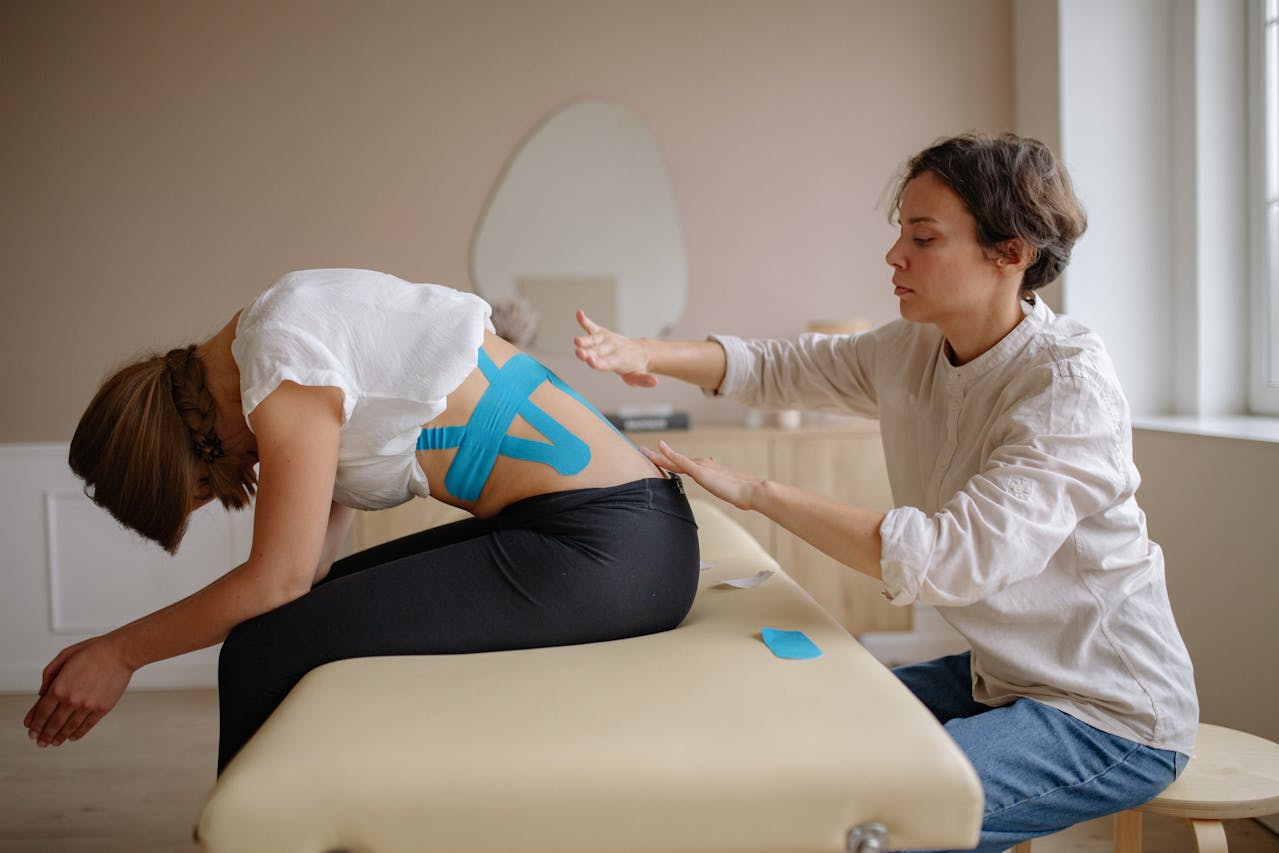
A professional physiotherapist treating a client’s back with a therapeutic tape approach to reduce discomfort.

Neurological Disabilities: Stability Through Motor Control and Strength

Neurological disorders can impair balance, coordination and motor timing. Strength work is a movement and posture stabiliser

Evidence‑backed programming principles for neurological presentations:

Specific strength: muscles used to maintain posture during real movements (i.e. sit-to-stand, reach, step).

Balance-integrated resistance: stability-challenging, yet safe exercises.

Repetition and consistency: strength sessions are scheduled to facilitate motor learning over time.

NDIS exercise physiology for neurological cases often focuses on trunk and hip control, ankle stability and limb strength to support everyday tasks. The result is not just “stronger,” but a steadier movement and greater confidence in participating.

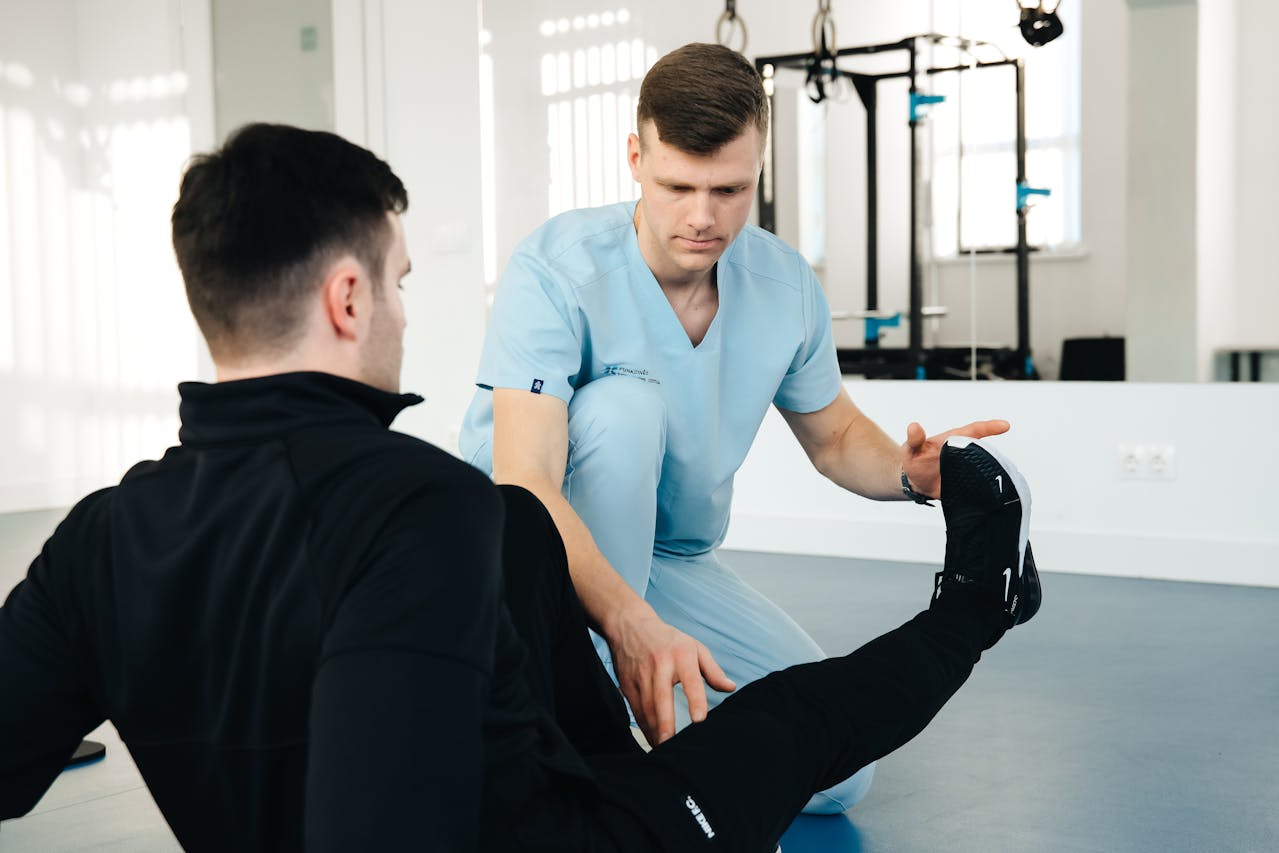
A physiotherapist guiding a patient through a seated Pilates exercise to enhance core strength.

Physical Disabilities: Enhancing Abilities for Everyday Life

In the case of physical disabilities, strength training helps the mechanical demands of the body – stabilizing joints, improving tolerance to load and allowing for safer movement.

EPs consider:

  • joint restrictions and range of motion technique and footwear requirements
  • realistic goals for fatigue management in functional transfers and walking tolerance

A good NDIS exercise program involves progressive resistance training of the major muscle groups together with functional variations based on everyday activities. Progress slowly and participants often report improved stability, less fear of movement and increased willingness to participate.

This approach is in line with rehabilitation and promotes wellbeing through restoration of ability to move, work and participate.

Psychosocial Disabilities: Confidence, Agency, and Reduced Avoidance

Psychosocial disability can impact motivation, self-efficacy, sleep, anxiety and activity participation. Working on the body through strength training can also support psychological confidence by way of competence and achievable progress.

EPs often embed:

  • predictable session format
  • clear skill cues and coaching that facilitates gradual exposure to movement challenges education that connects training to personal goals

Personal trainers can be a useful part of wider fitness support, but the clinical advantage of ndis exercise physiologists is that they align training with disability needs and functional goals – making sure exercise is safe, effective and aligned with plan requirements.

Strength training restores agency, and participants may start to feel less “stuck” as exercise becomes a reliable part of their routine instead of a barrier.

What “Evidence‑Backed” Looks Like in the Real Program

A quality EP-led program typically features measurable components:

  • Strength, endurance, balance or pain behaviour: baseline reference points
  • Skill progression (technique over heavier load)
  • Check and adjust periodically
  • Transfer of Function (real life support training)

This is in line with NDIS exercise therapy principles: therapy that translates to action in daily life, not just action in the clinic. It also explains why NDIS exercise physiology is not just about workouts, it’s a structured clinical intervention with progression plans.

For NDIS participants the pathway generally looks like:

safer standing and walking around more often less pain flare-ups over time more confidence walking in the community more willingness to participate in physical activity

Role Clarity: Where EPs fit in with other support

With the NDIS strength training is rarely a solo effort. EPs may work with other clinicians and support workers to create continuity – particularly if a participant also accesses physiotherapy, occupational therapy or behavioural support.

EPs are focused on:

  • the strength and conditioning side education on training response progression and functional goal tracking

Where other providers assist (including personal trainers) the EP’s role is to ensure that the program remains clinically appropriate and aligned to disability-specific safety needs. This is particularly important in the case of physical disabilities, where the technique and the load tolerance must be carefully checked.

A woman reclines on an exercise ball, engaging her core muscles during a physiotherapy exercise.

NDIS Registration, Safety & Ethics in Programming for Participants

The provider’s credibility and accountability matter under the NDIS. Many families are looking for NDIS registered professionals such as an exercise physiologist who understands disability and functional outcomes. Programming with a solid process makes it safe to jump in and move ahead.

In this context, NDIS exercise physiology offers a bridge between clinical assessment and real-world outcomes, decreasing uncertainty and fostering sustainable behaviour change.

Practical Takeaways: What to Expect From Strength Training Led by EP

When EPs develop ndis exercise physiology programs participants can generally expect:

  • A purposeful plan: strength training linked to NDIS goals
  • Progressive overload: change load according to response
  • Building confidence: Repeated success moving safer
  • Training modulates the perception of pain capacity and tolerance

Real life carry over: exercise to support transfers, ambulation and participation.

These are the reasons why strength training is achievable and meaningful for so many participants if you are looking into exercise physiology NDIS.

Strength Training as Functional Confidence

Strength is a base for stability, less pain interference, and confidence to participate. When EPs apply evidence-informed assessment and progressive training design – based on NDIS exercise physiology principles – the result is not just enhanced capacity but enhanced daily life.

Whether a participant’s needs are neurological, psychosocial or physical disability, the right NDIS exercise physiology program can be a turning point. It can take them from uncertainty to competence, from avoidance to participation, and from “can’t” to “I can do that.”

This difference is often evidence-backed exercise physiology, delivered by NDIS exercise physiologists, which is the difference between exercise that is tolerated and exercise that actually improves wellbeing. If you want a program that respects the realities of disability and delivers measurable functional outcomes.

Related Websites

Physio in Adelaide
Physiotherapy Now
Physiotherapy Today
Physio Today
Physio World
My Physiotherapy Center
Physiotherapy Now

To guide you towards optimal health and well-being.

Copyright © Physiotherapy Now 2099. All Rights Reserved.

| Terms & Conditions | Privacy Policy |

Built by Augmentum Digital 2025

Opening Hours

Monday - Friday
9 AM - 5 PM
Saturday
Appointment Only
Sunday
Closed

Get In Touch

Location
Adelaide, South Australia, Australia
Phone
+61 123 4567 890
Email
help@physiotherapynow.xyz
linkedin facebook pinterest youtube rss twitter instagram facebook-blank rss-blank linkedin-blank pinterest youtube twitter instagram